佐井寺の家
House in Saidera
国や文化、年代の異なるどんな人の心も惹きつける住宅の姿を探り続けている。それは贅を尽くした煌びやかな豪邸でも、ミニマルなホワイトキューブでもないだろう。きっと、土地の空気に溶け込みながら、普遍的な美しさを湛えた時代を超えた住宅なのだと思う。
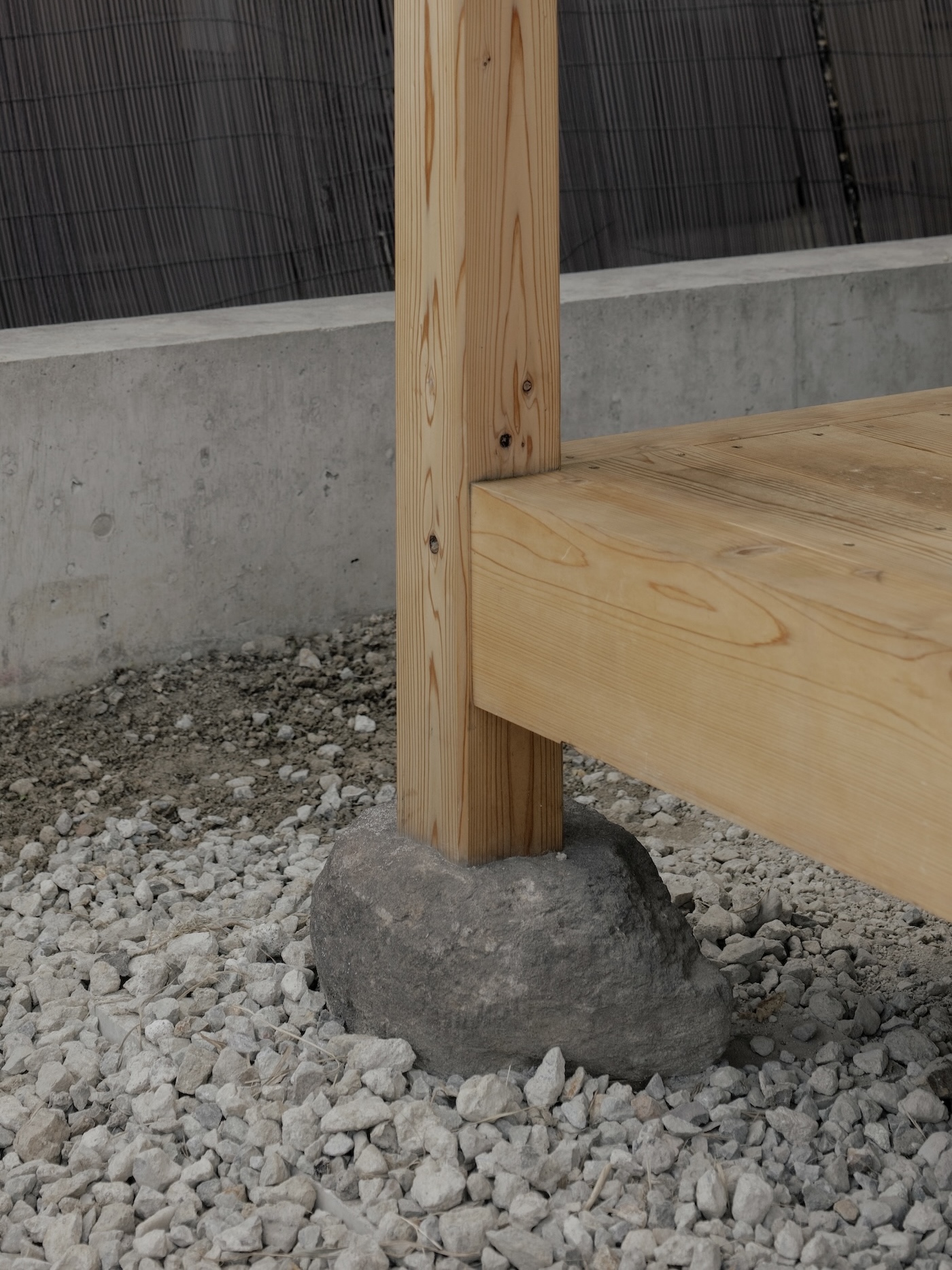
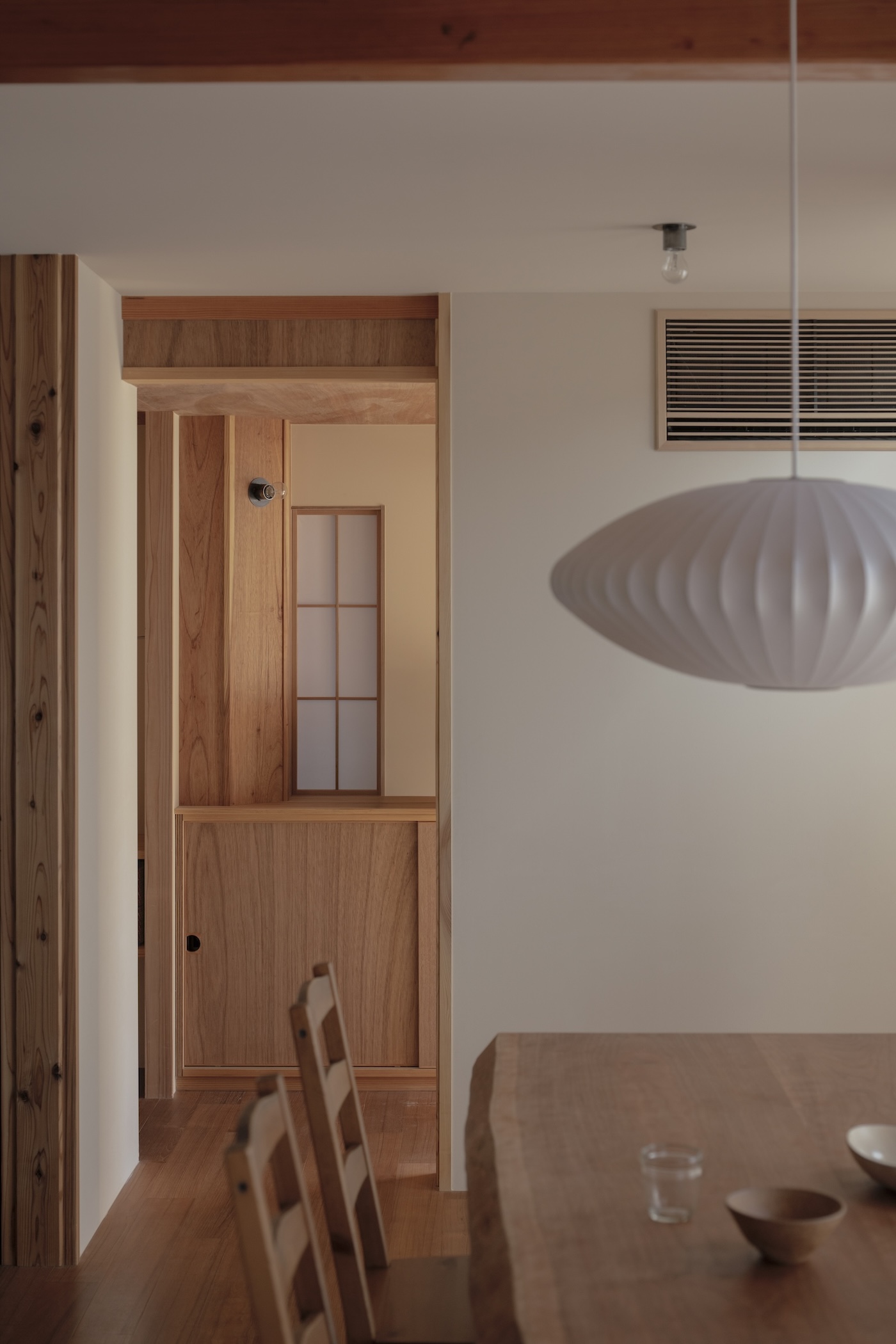
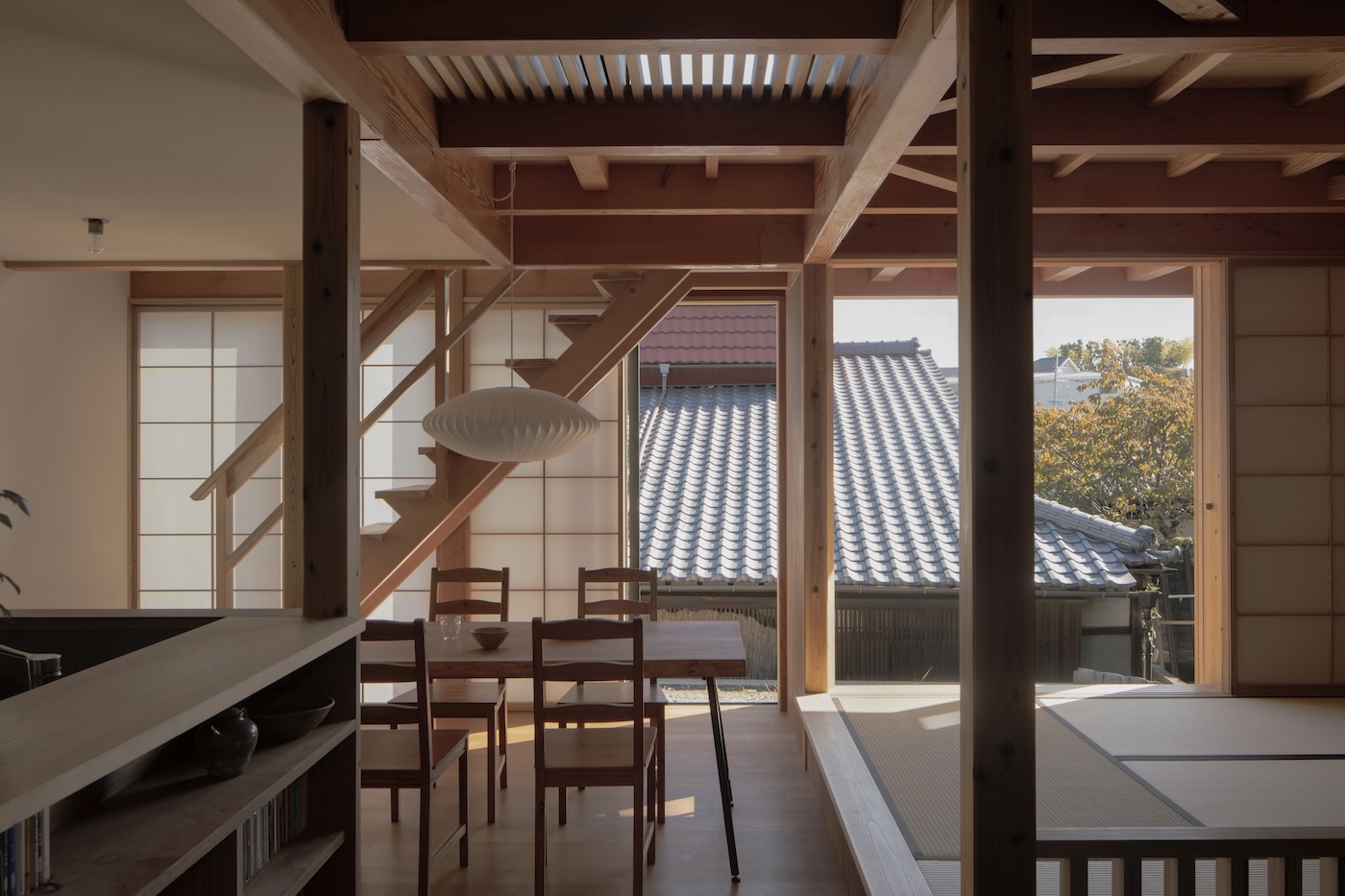
敷地は、昔ながらの日本家屋と現代的なメーカー住宅が入り混じる、時代の変遷の只中にある旗竿地。限られた予算の中で、この地に適した5人家族のための家を描くにあたり、私の頭の中には日本家屋の姿があった。真壁で軸組が現された、無駄を削ぎ落とした簡潔な佇まい。たとえ面積が小さくても、内と外、内と内が完全に隔てられていない透け感をもつ住宅であれば、窮屈さを感じずに暮らすことができるだろう。工事費が高騰し続ける今、永くこの国で育まれてきた住宅の姿を見つめ直すことこそ最適解であると信じ、設計を進めた。
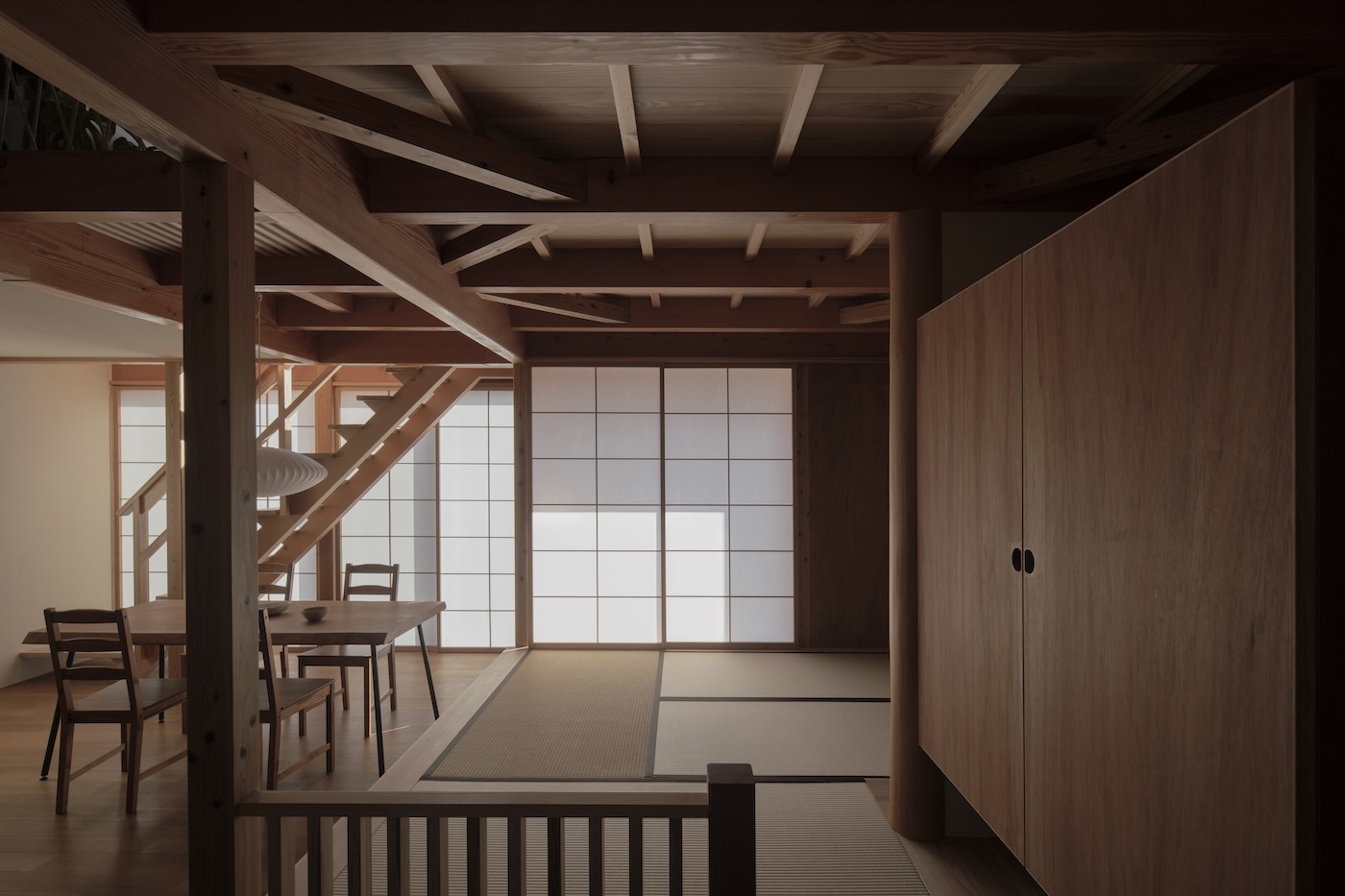
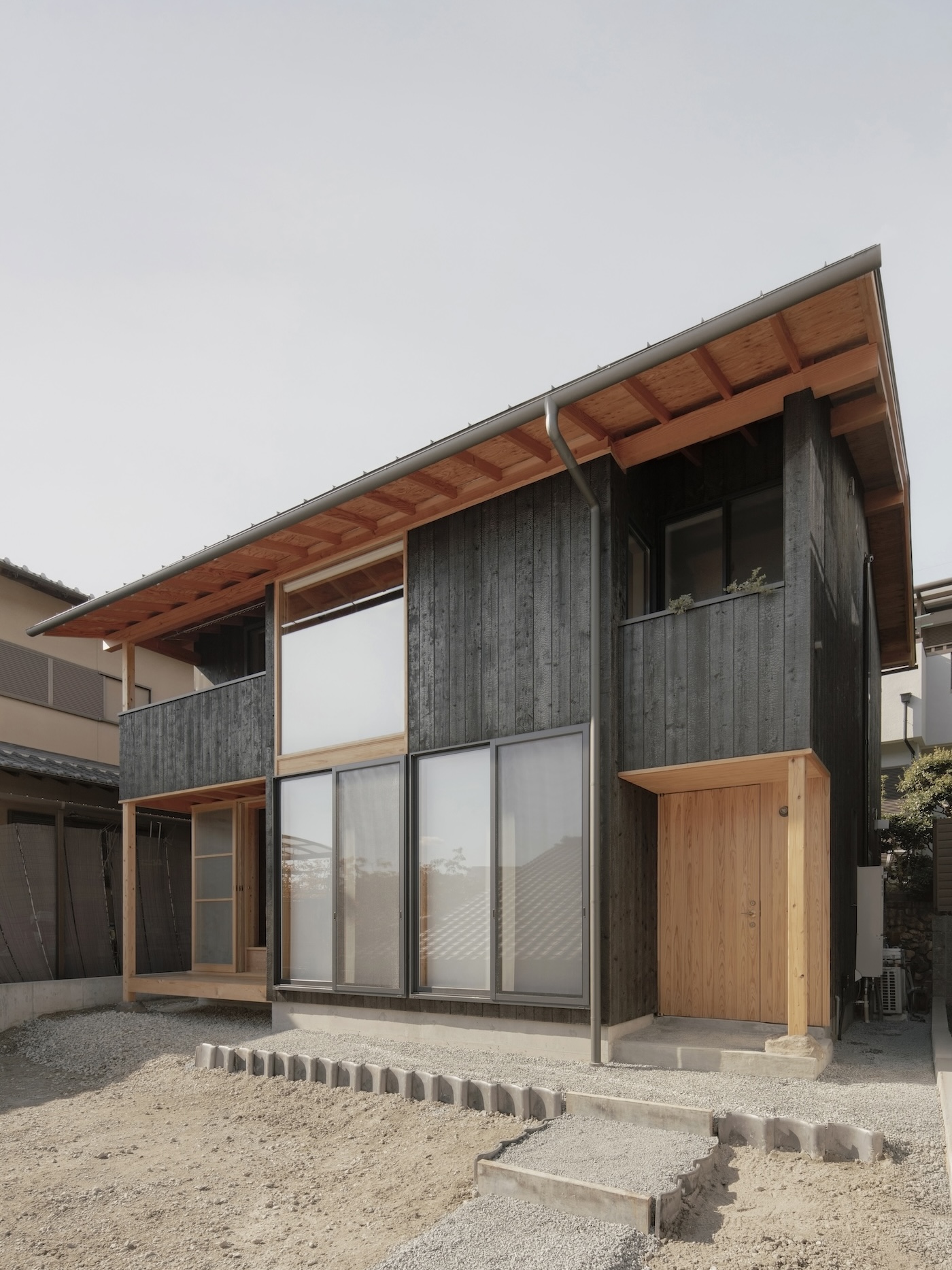
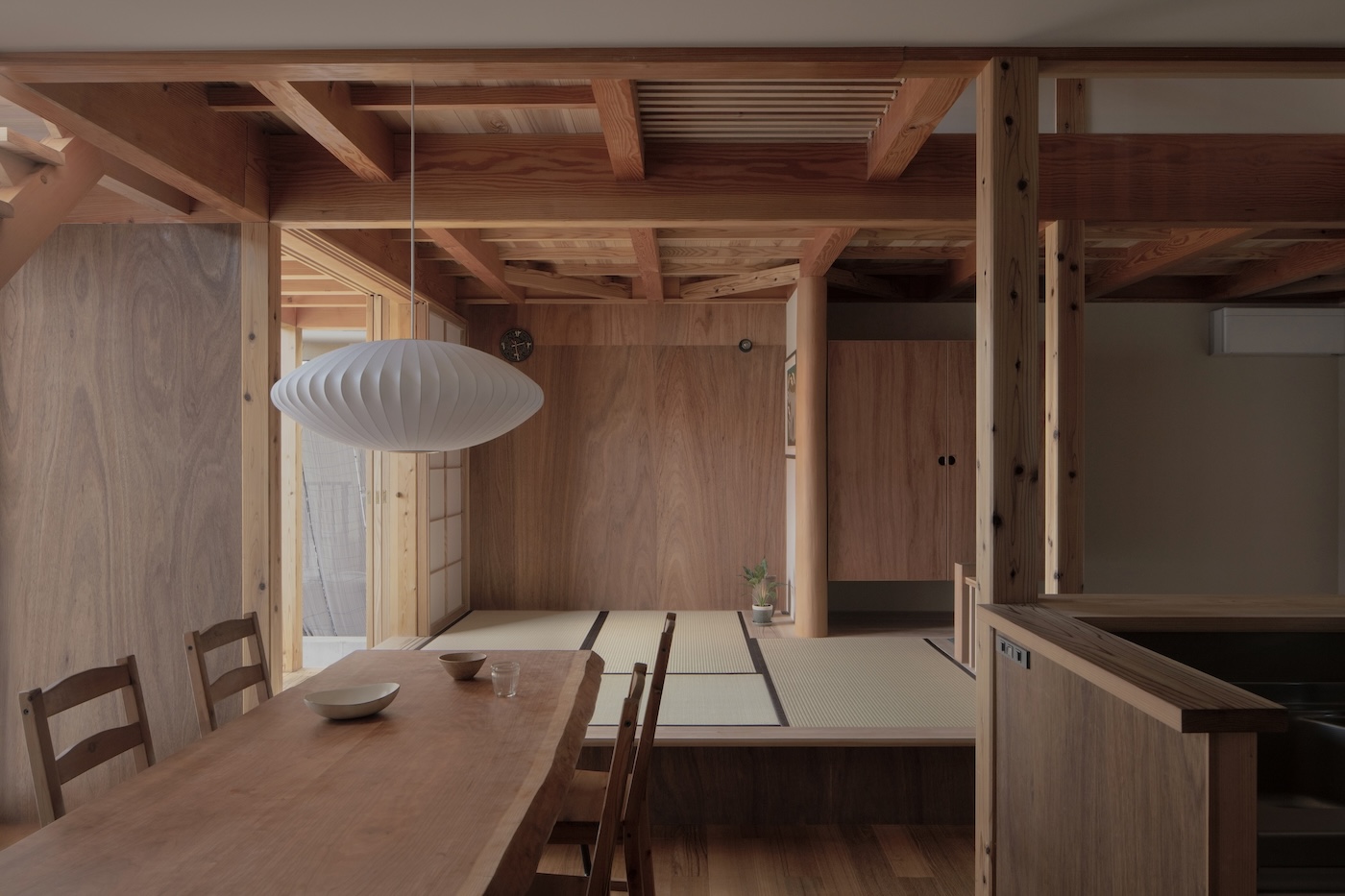
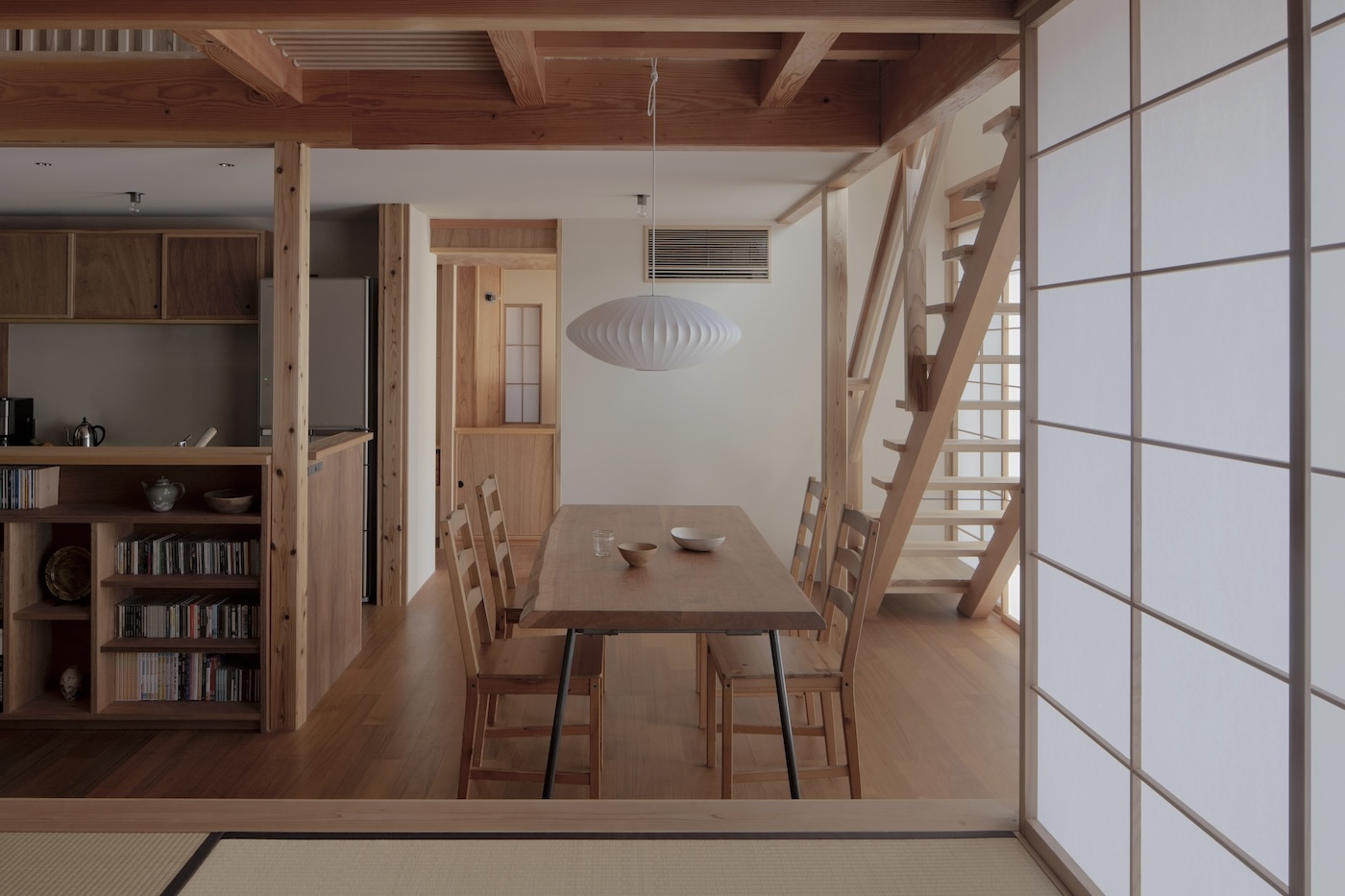
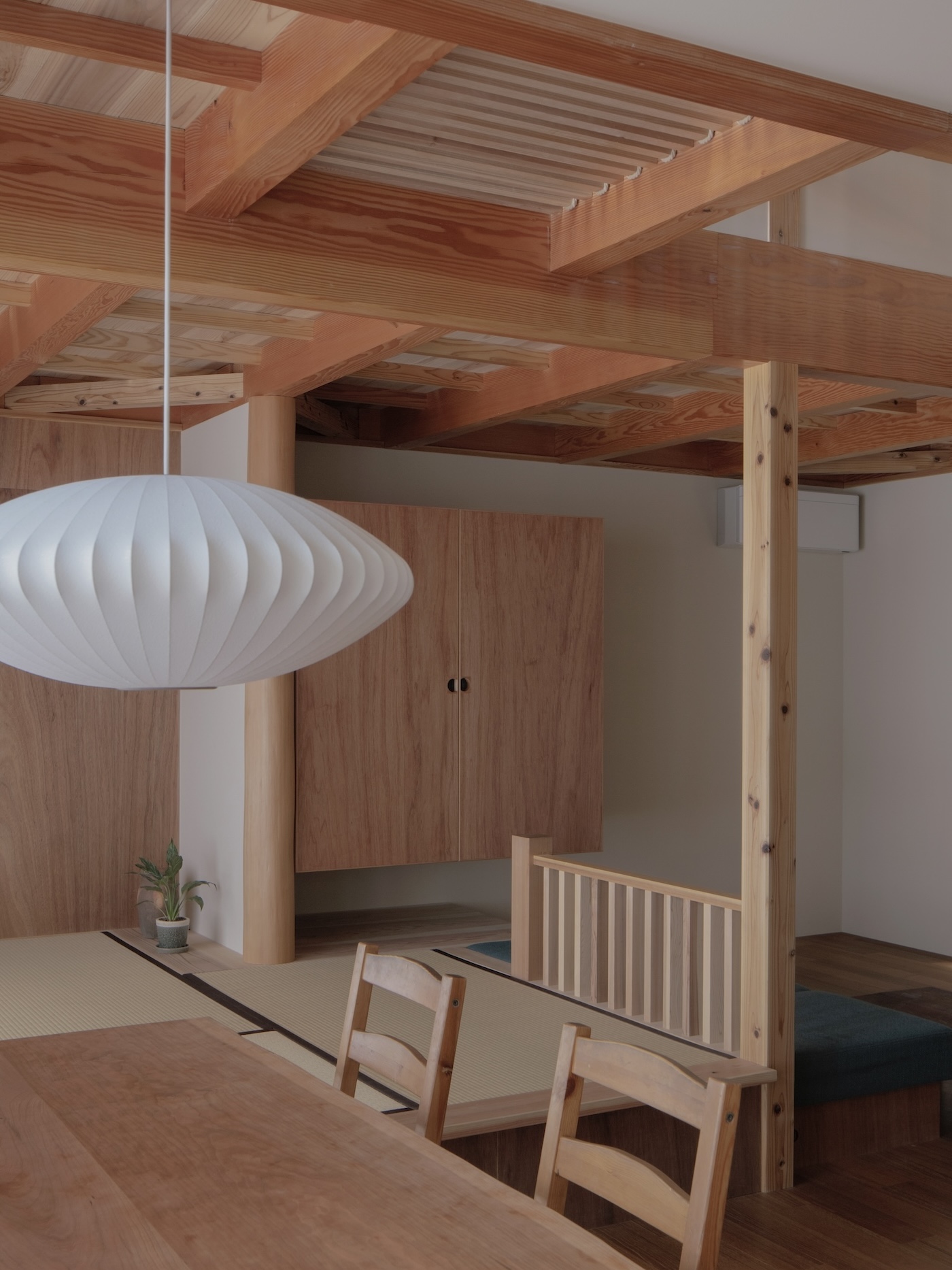
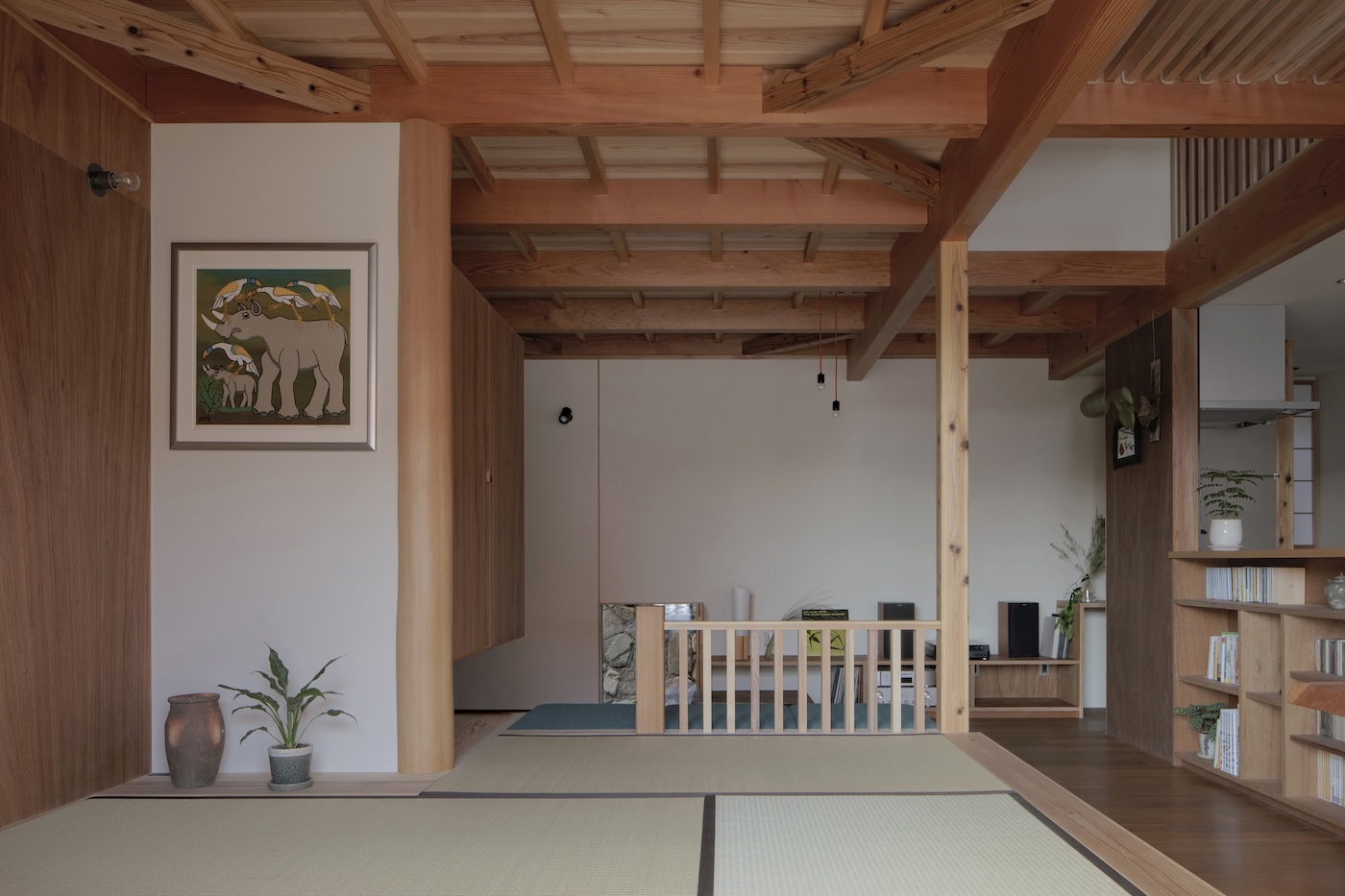
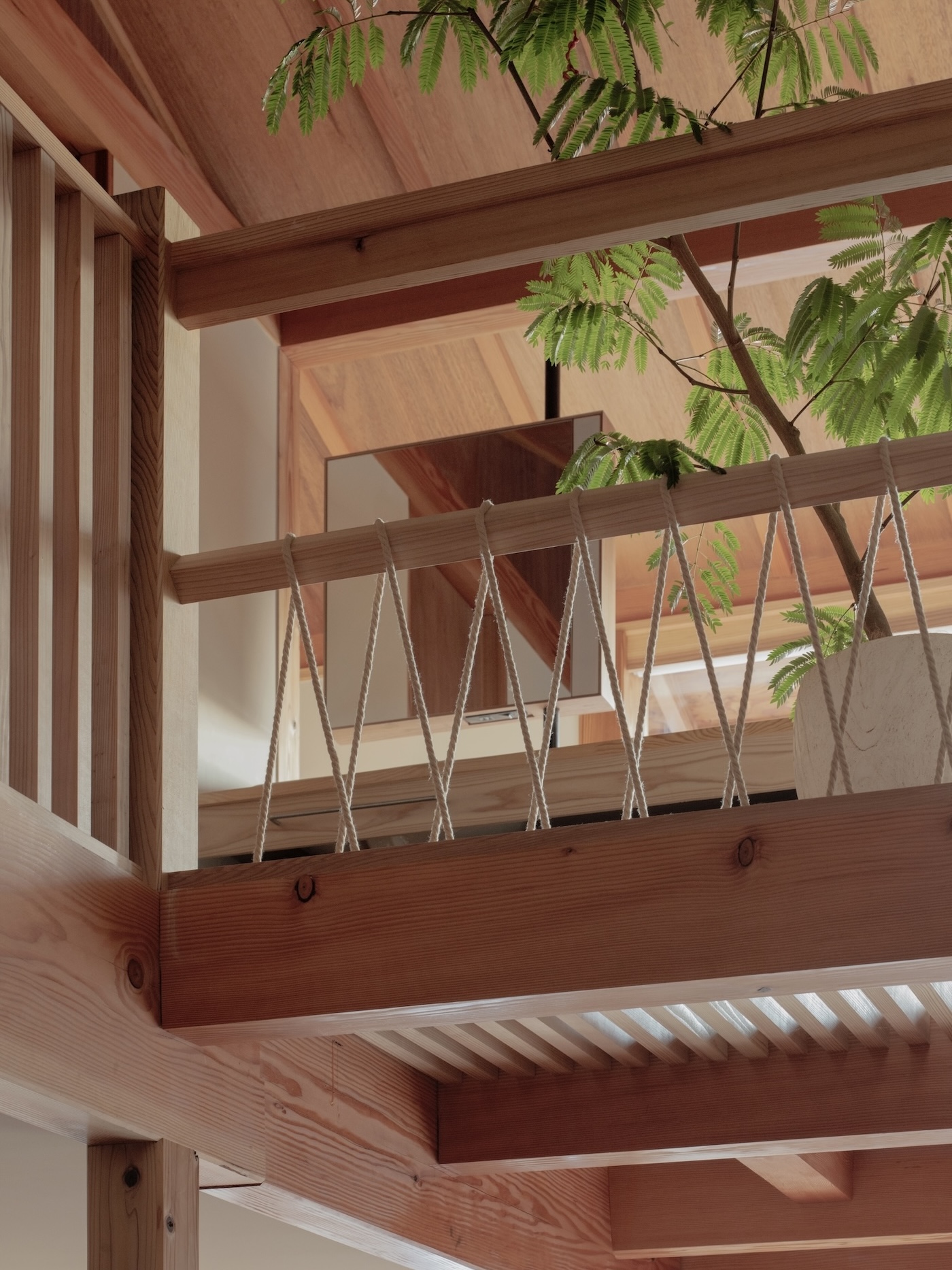
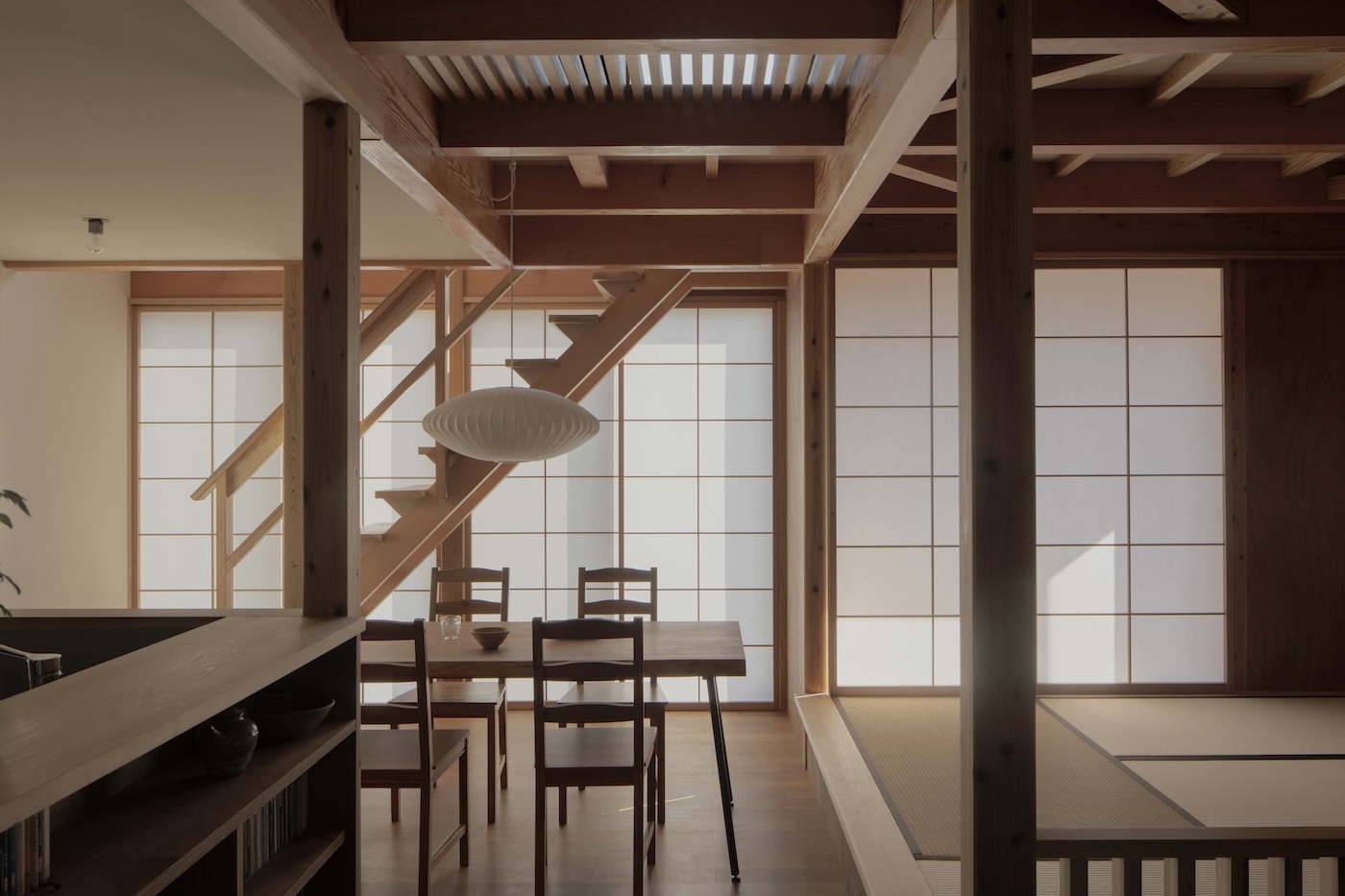
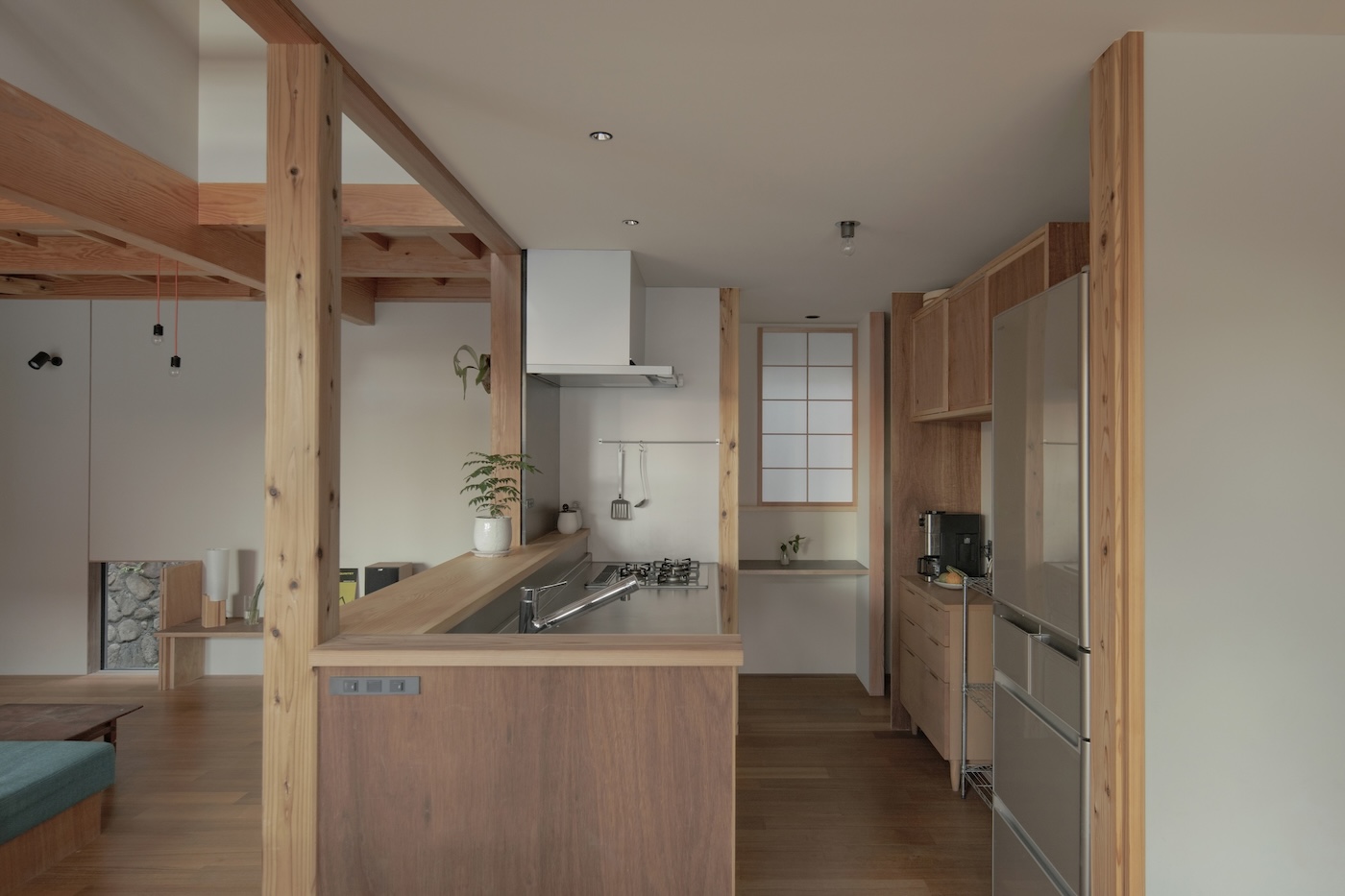
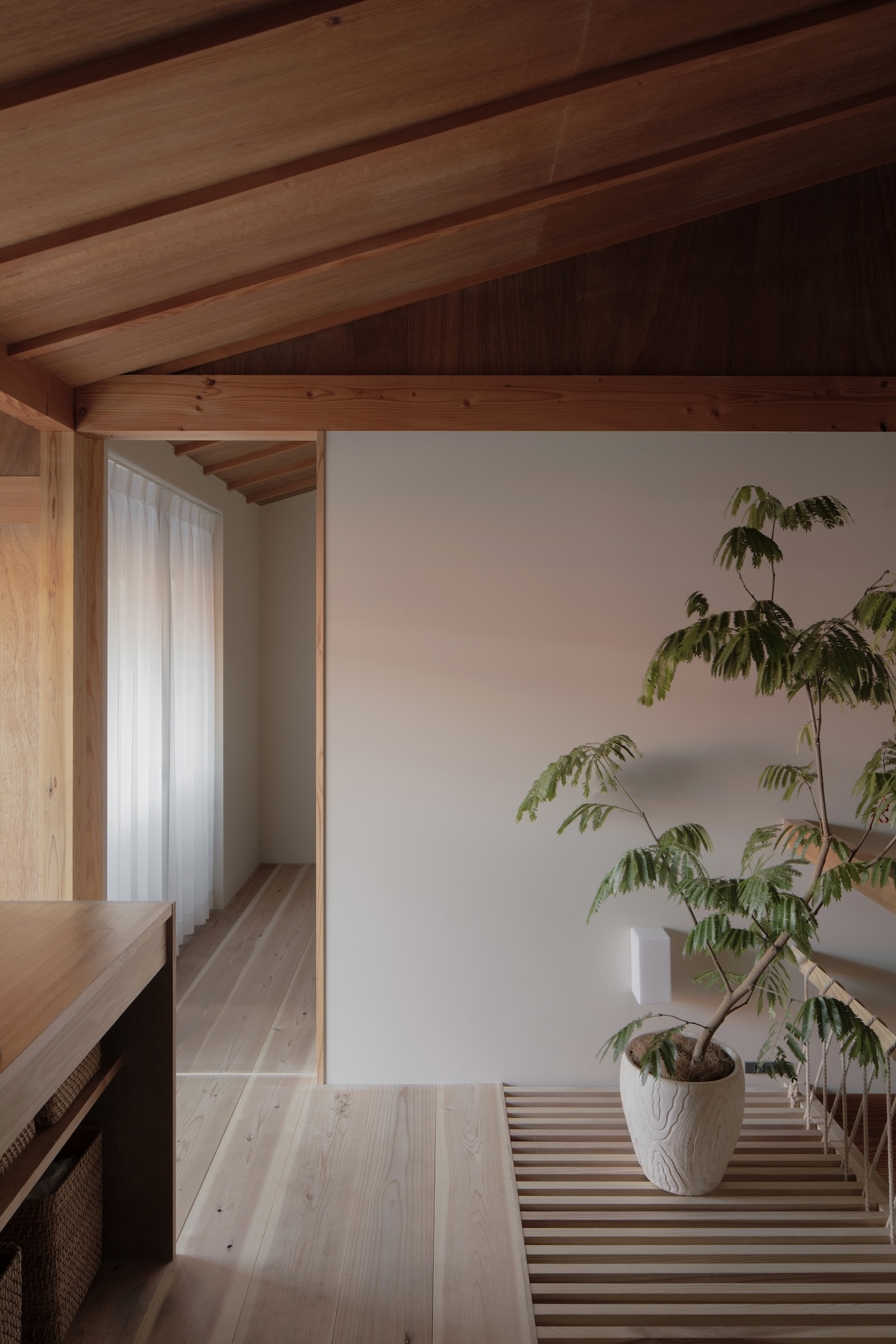
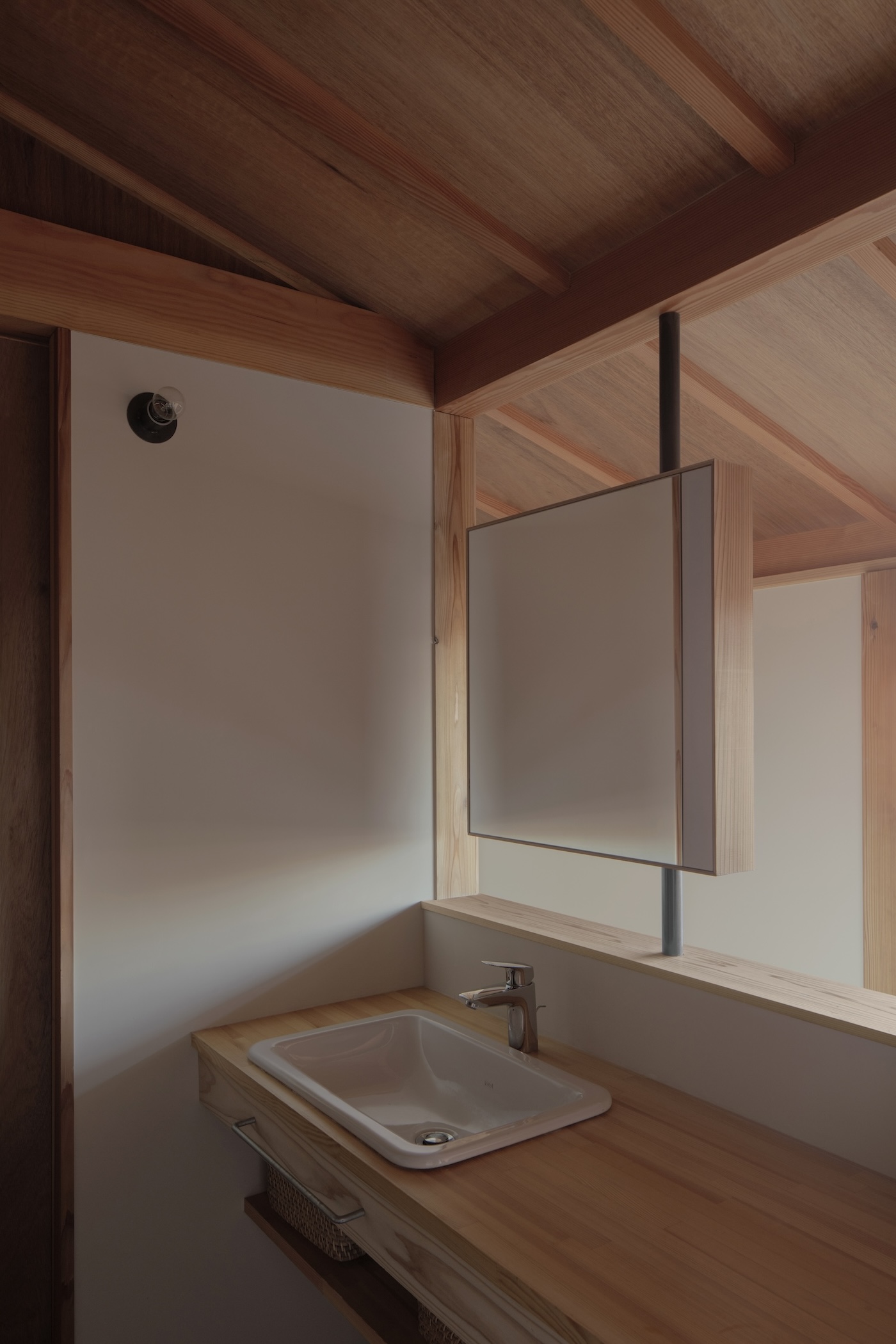
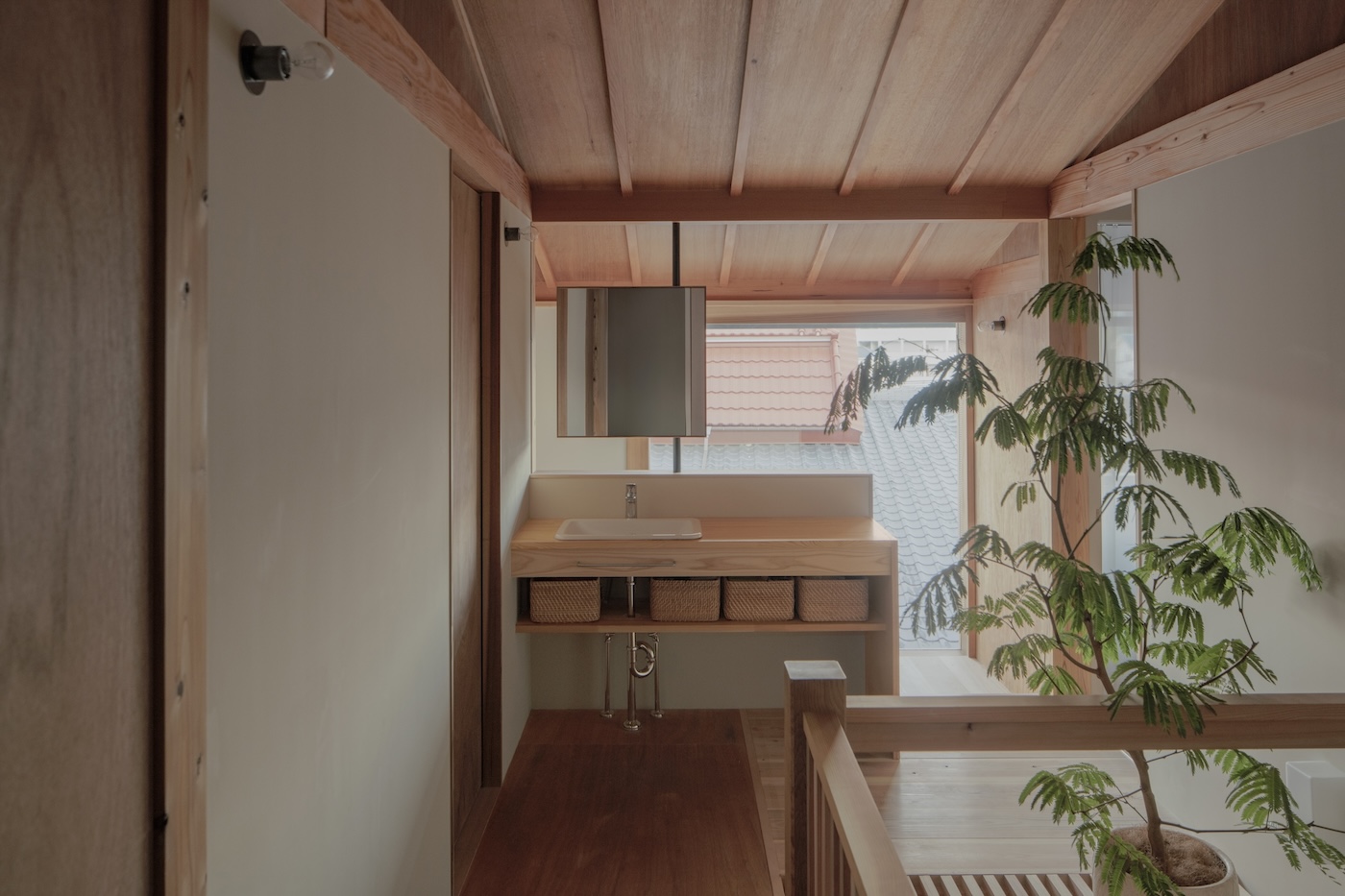
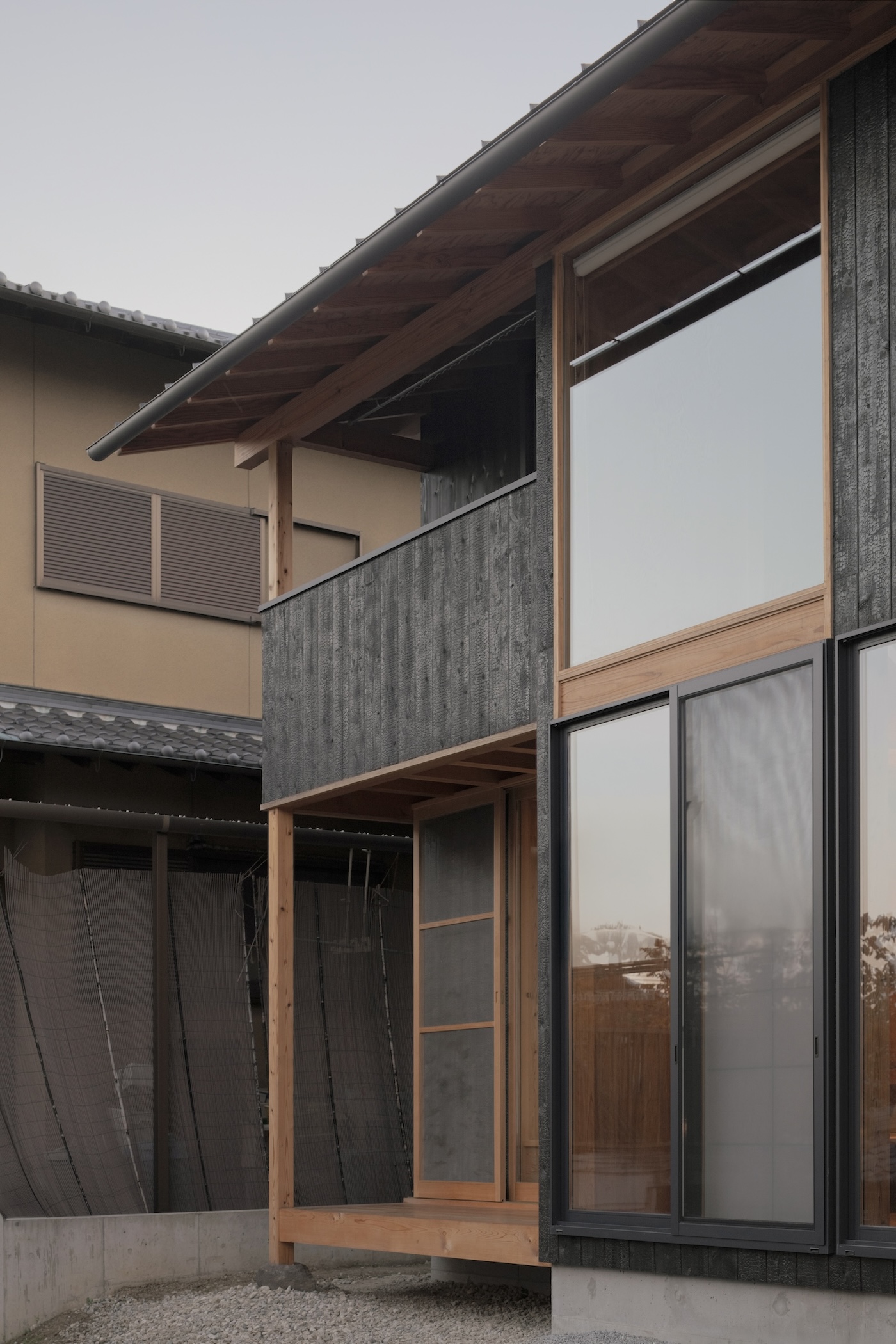
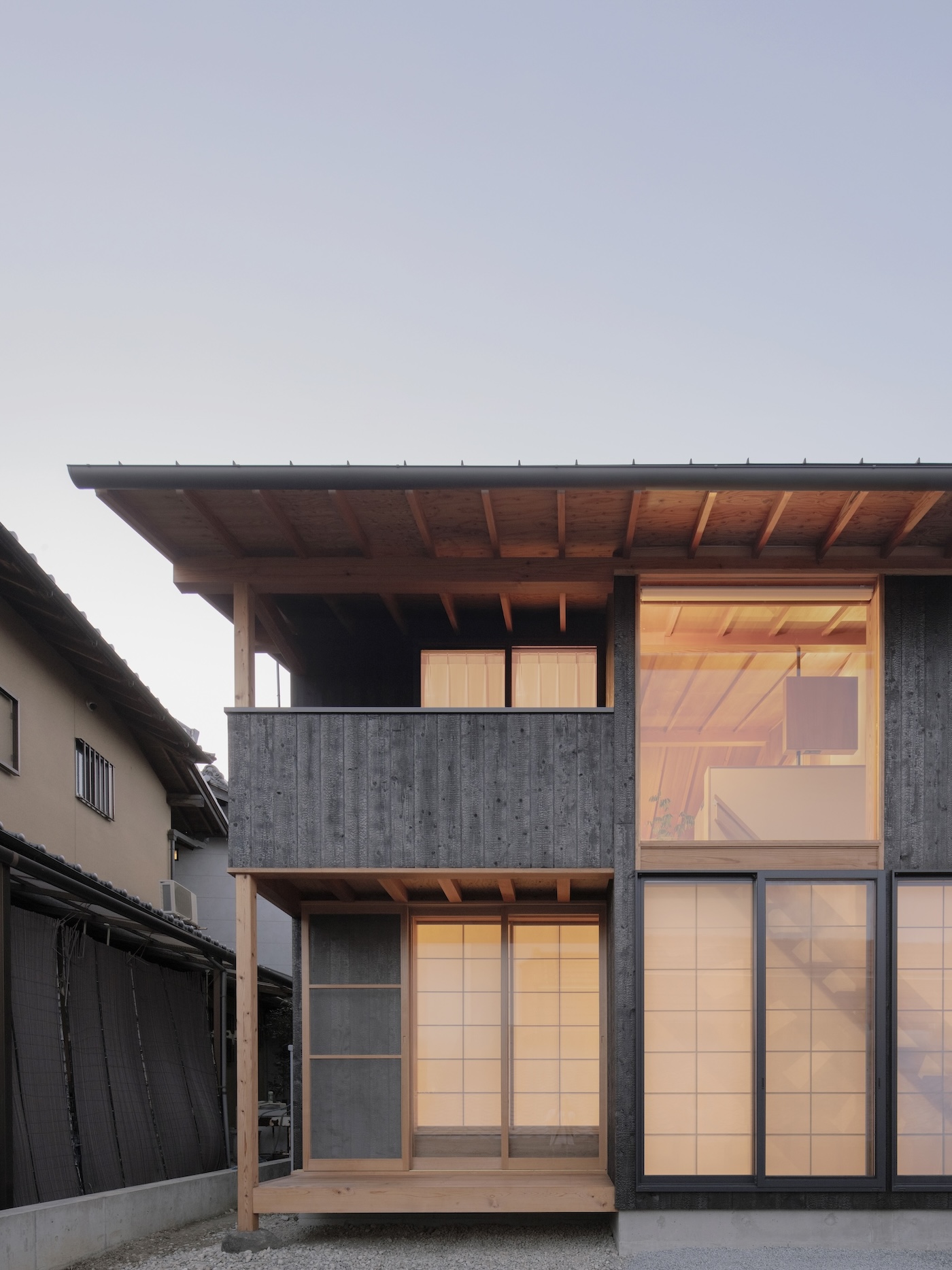
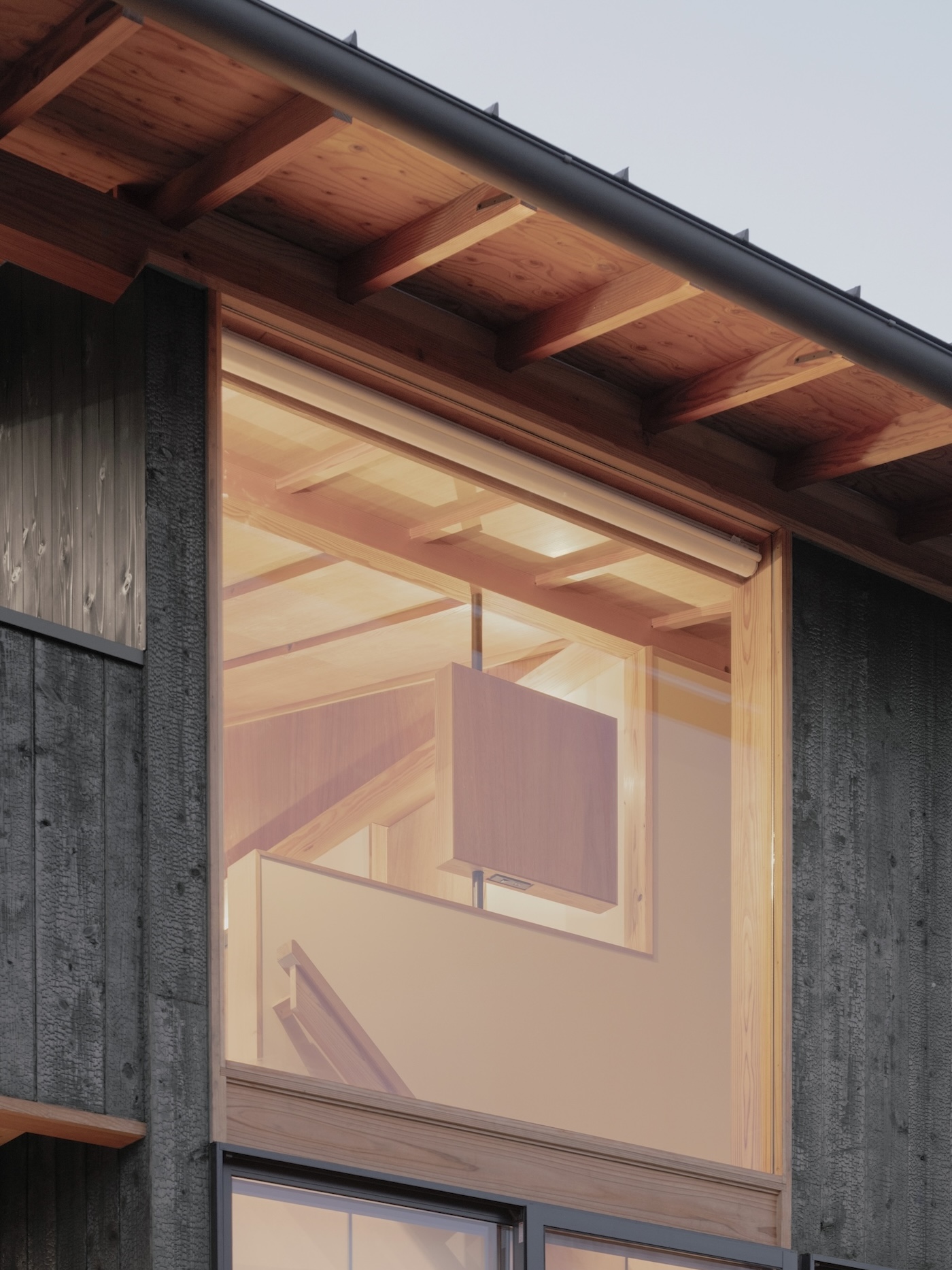
建物は周囲の環境に馴染むよう、総2階建てに切妻屋根をかけたシンプルな形状とし、焼杉で仕上げた慎ましい外観とした。階高を抑えつつ構造を現し、2階床を1階天井と兼ねた杉板一枚とすることで、材料や工事を減らしながら開放感を確保している。建材は手に入りやすい一般的なものに限定し、工種が増える仕様を避け、大工の手で完結できるものを採用した。料理好きの夫婦のために台所と食事室を家の中心に据え、その周囲に生活の諸要素をコンパクトに散らしつつ、土地の低い東側に向けて大きな開口と縁側を設け、自然と意識が外へと向かう、家族5人が伸びやかに暮らせる住まいを目指した。
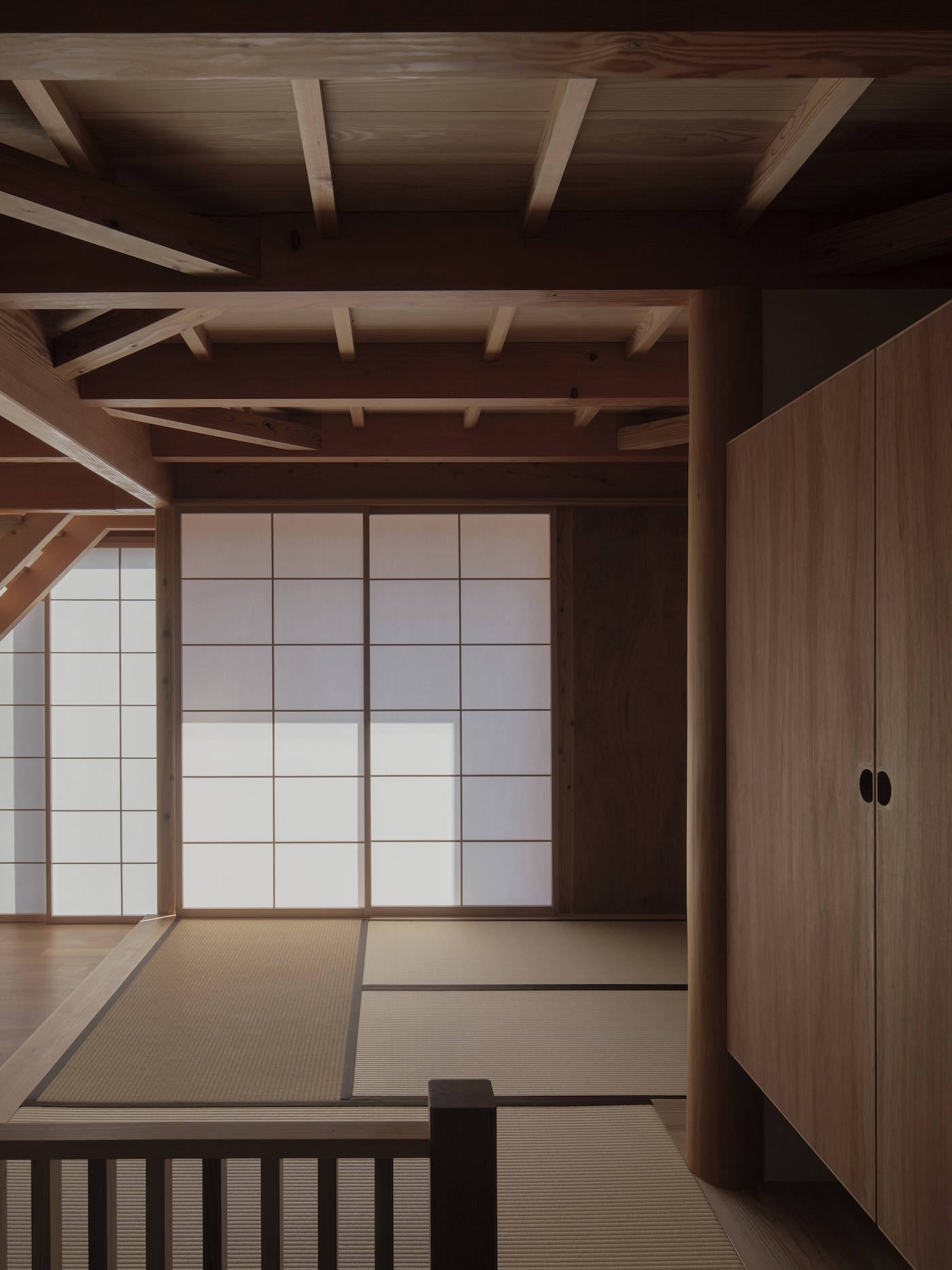
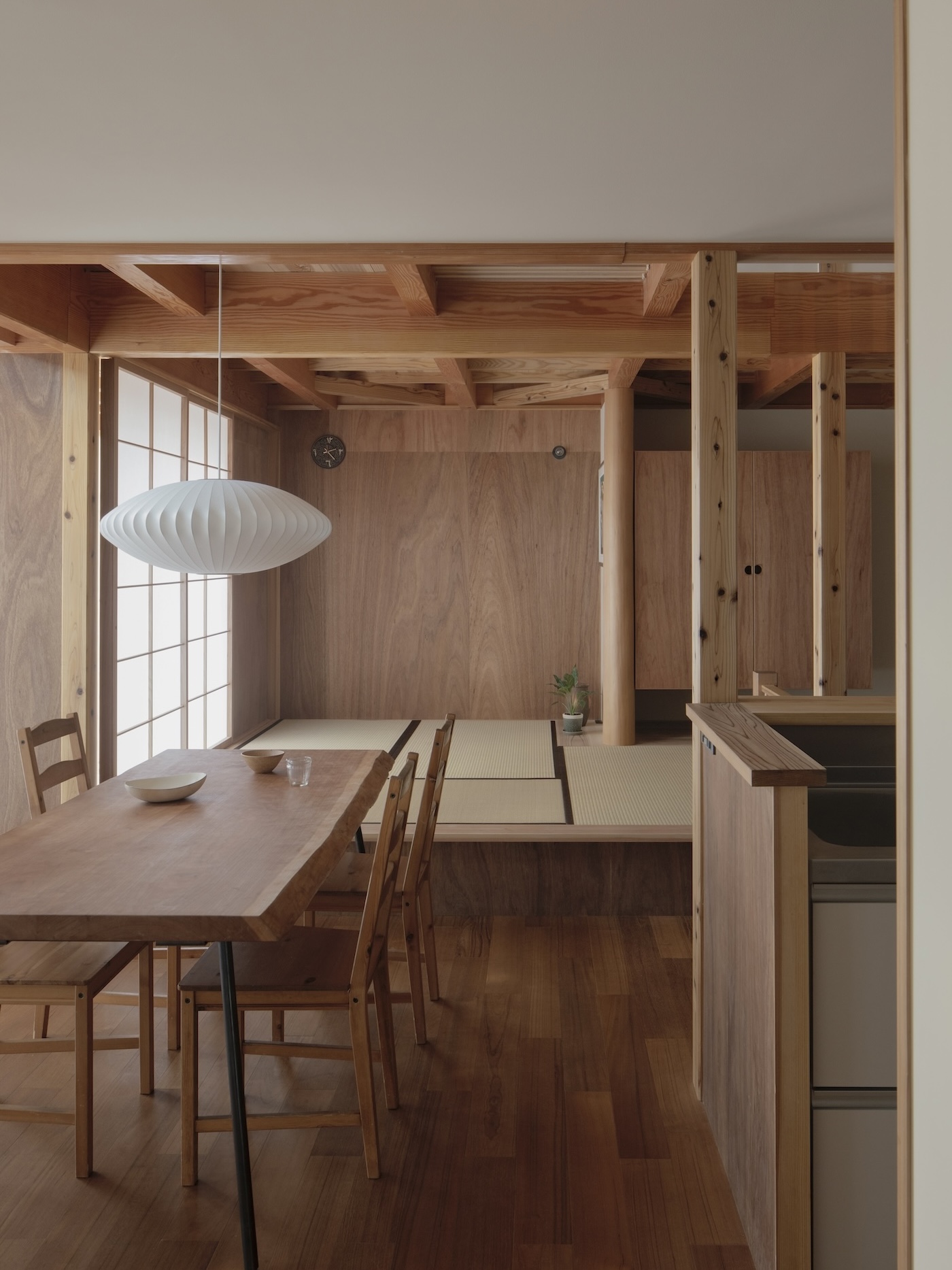
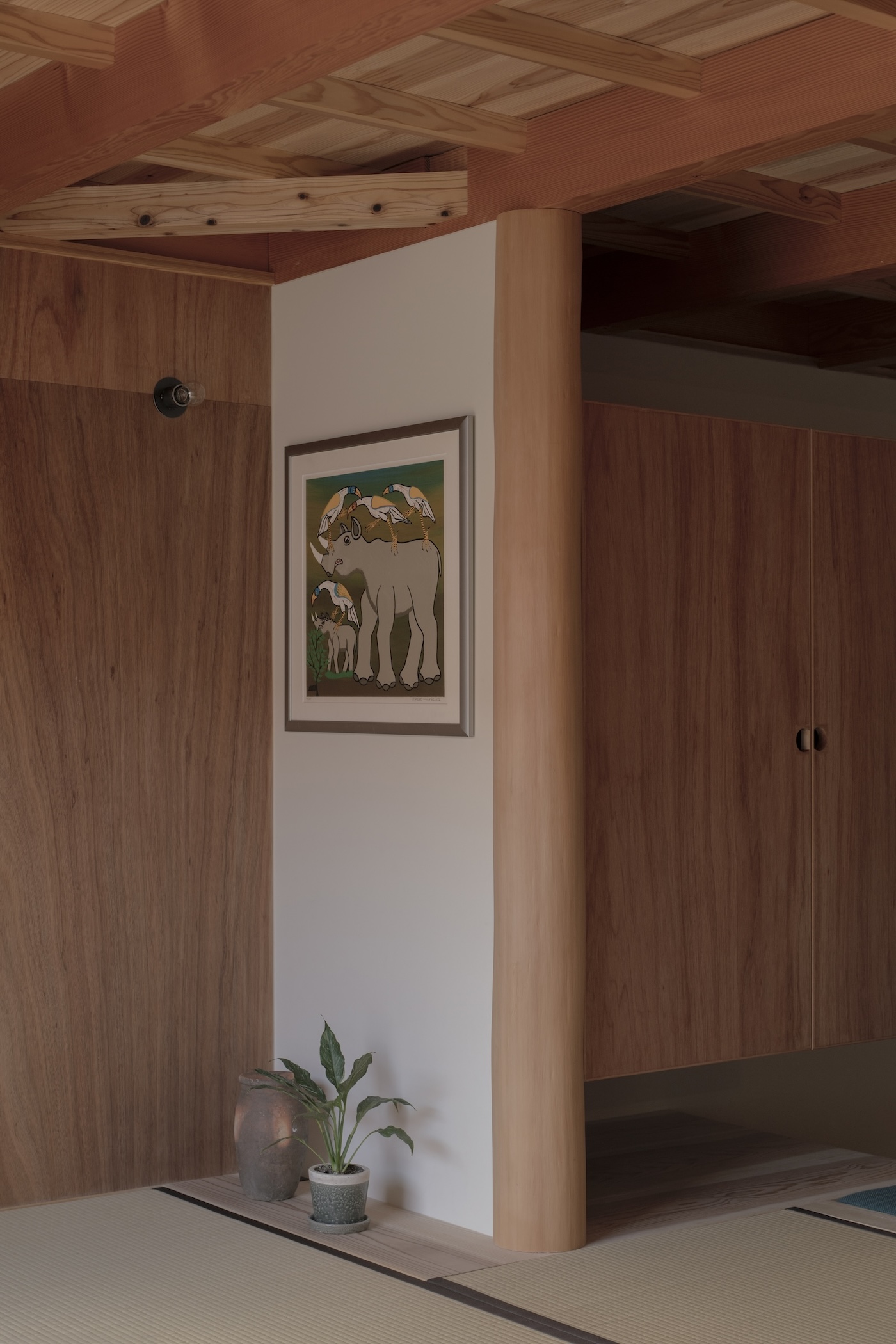
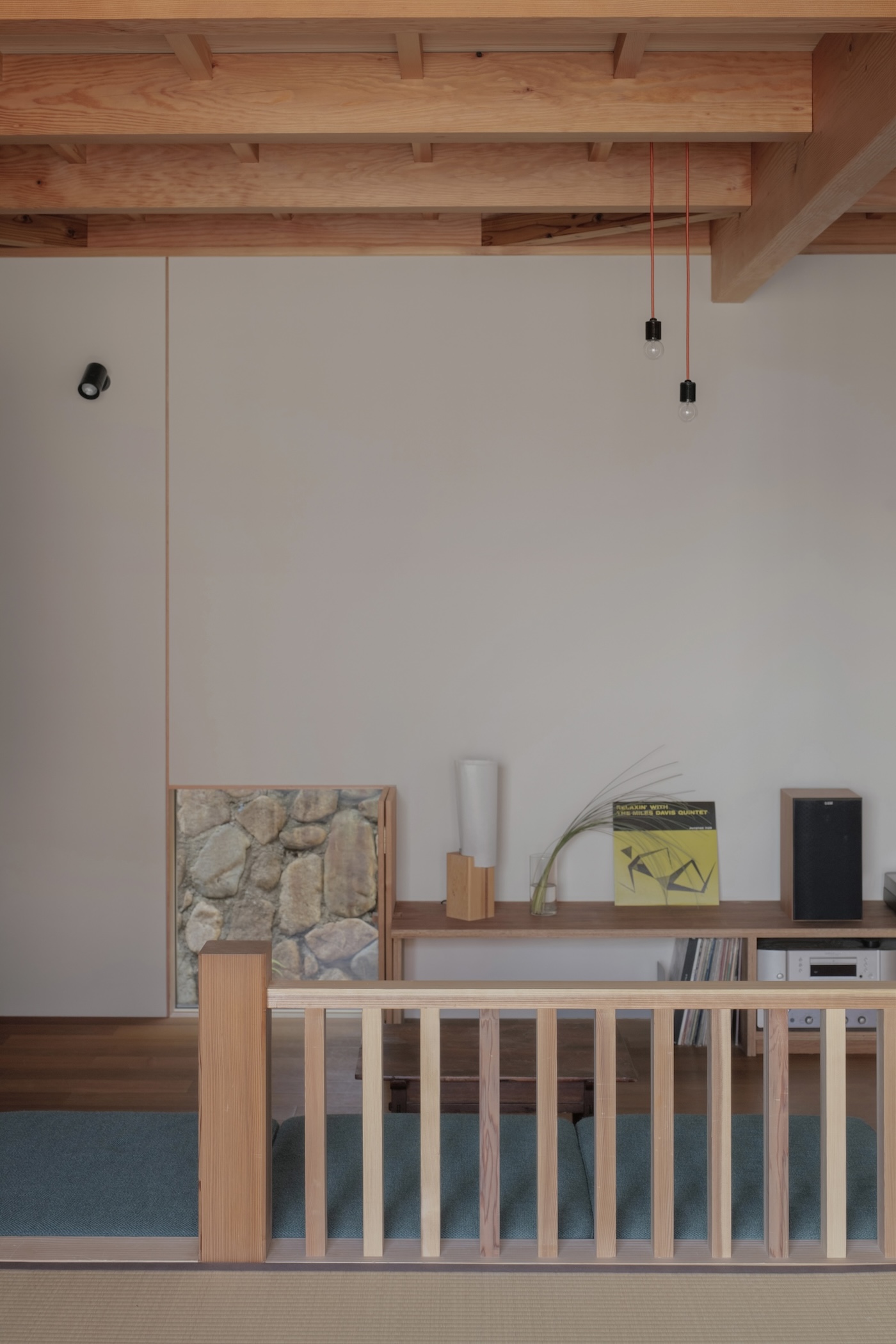
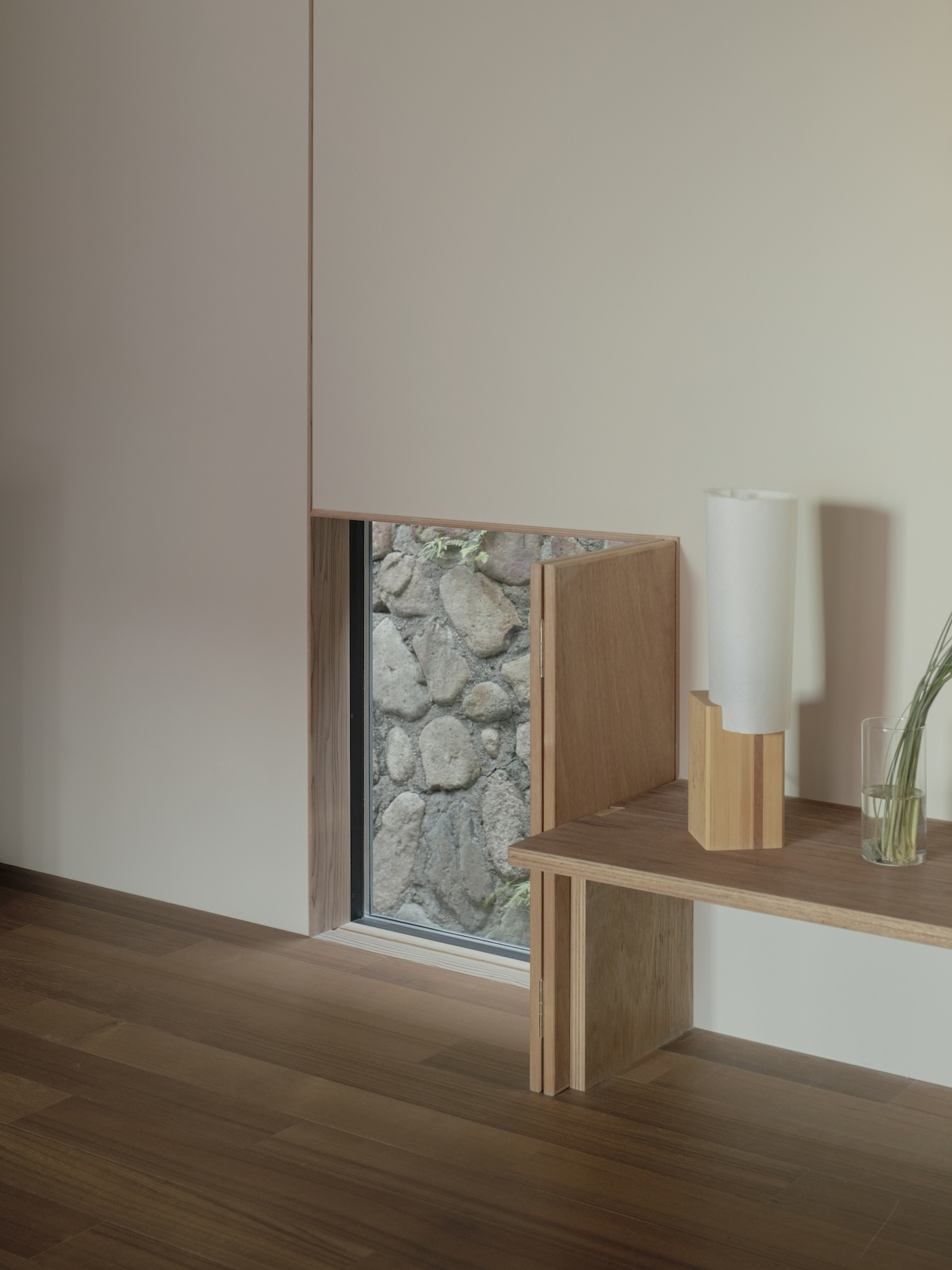
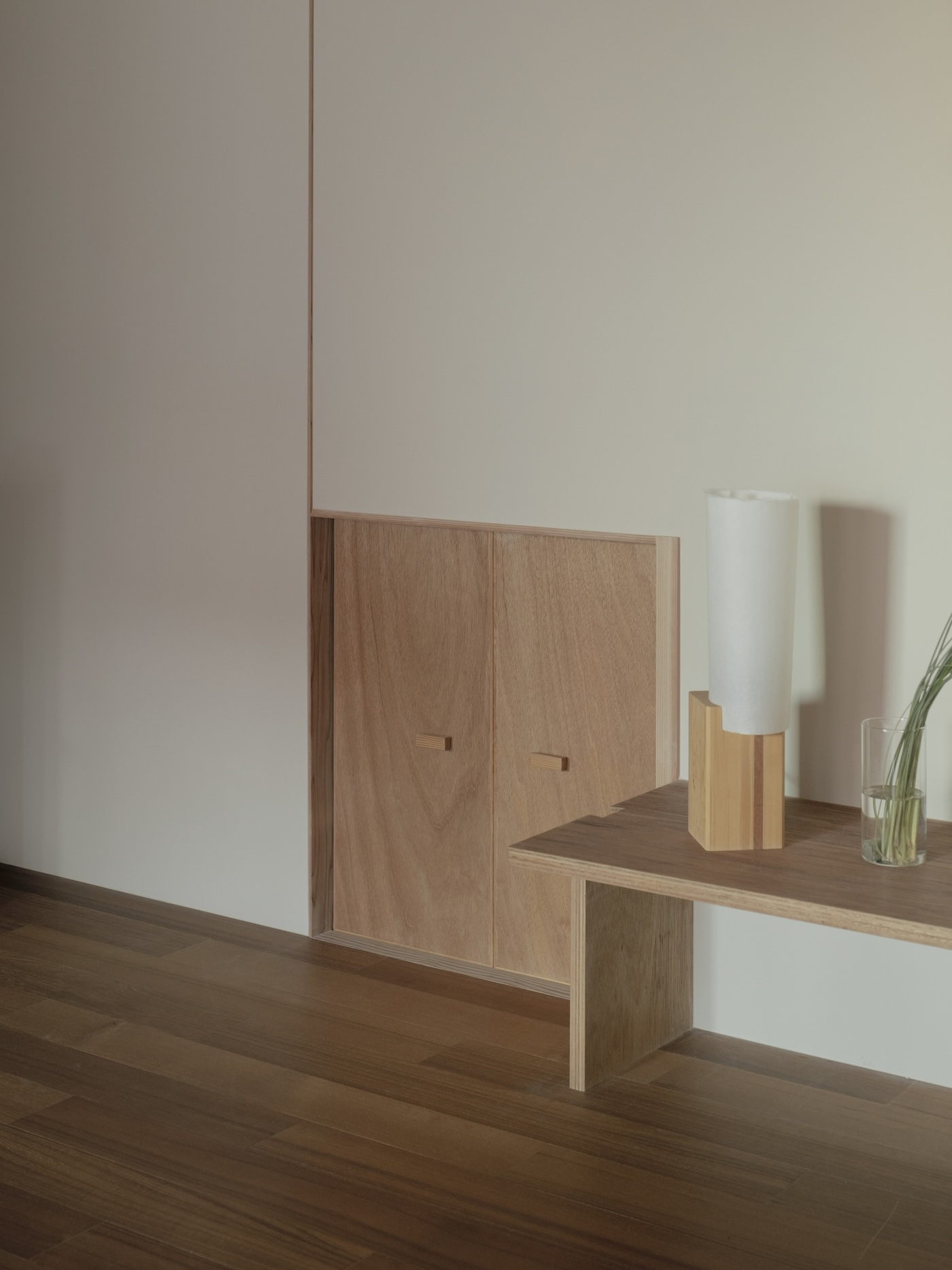
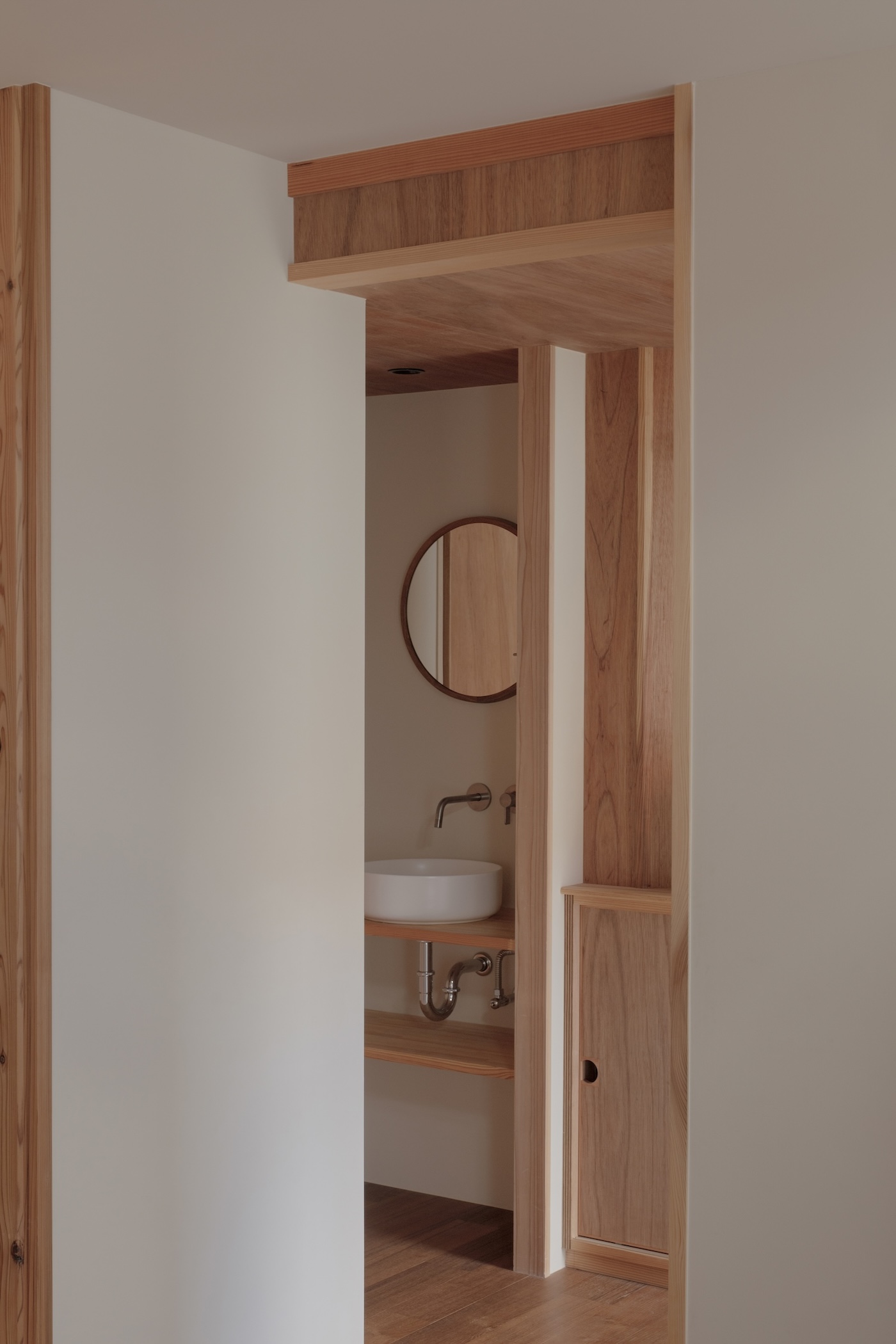
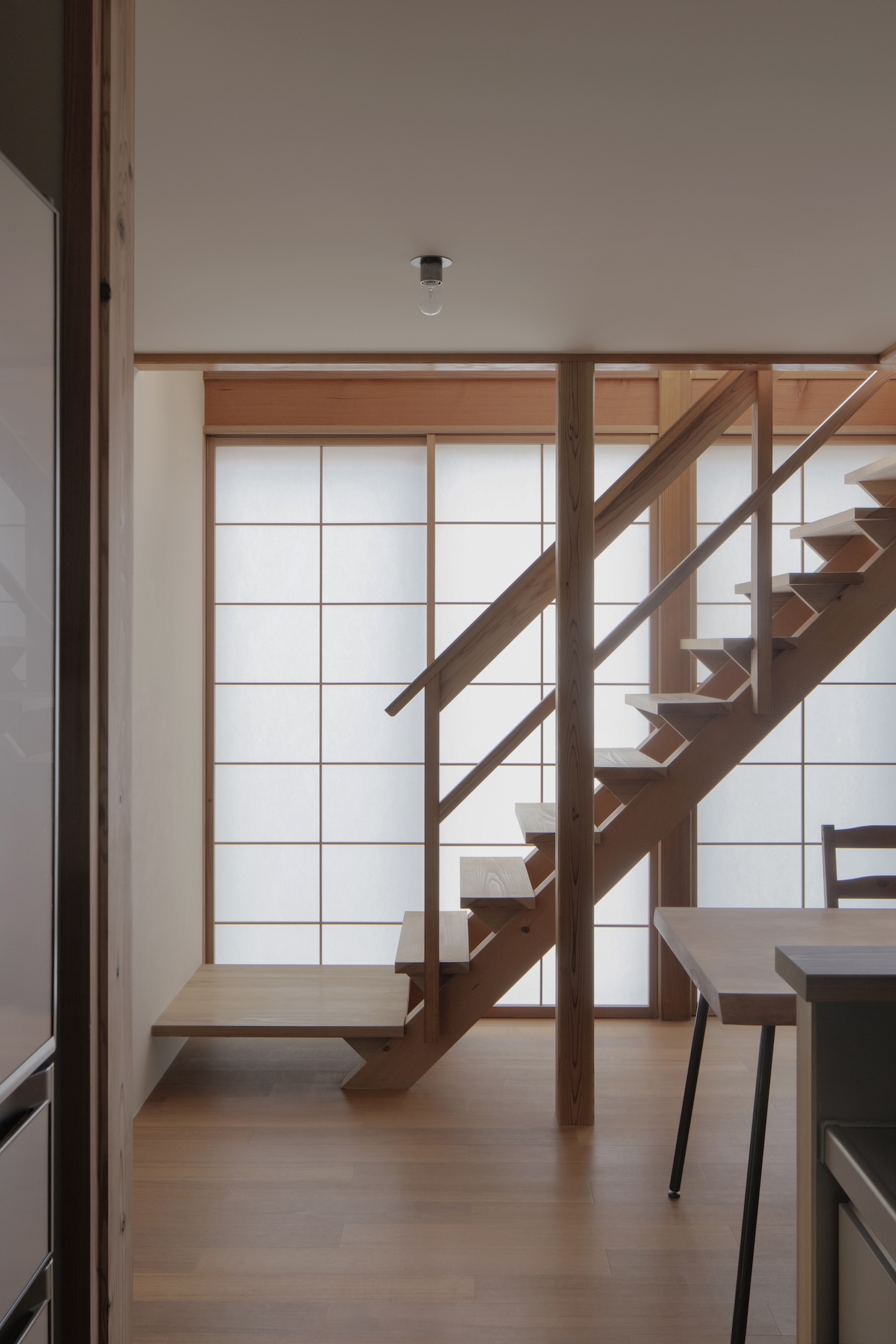
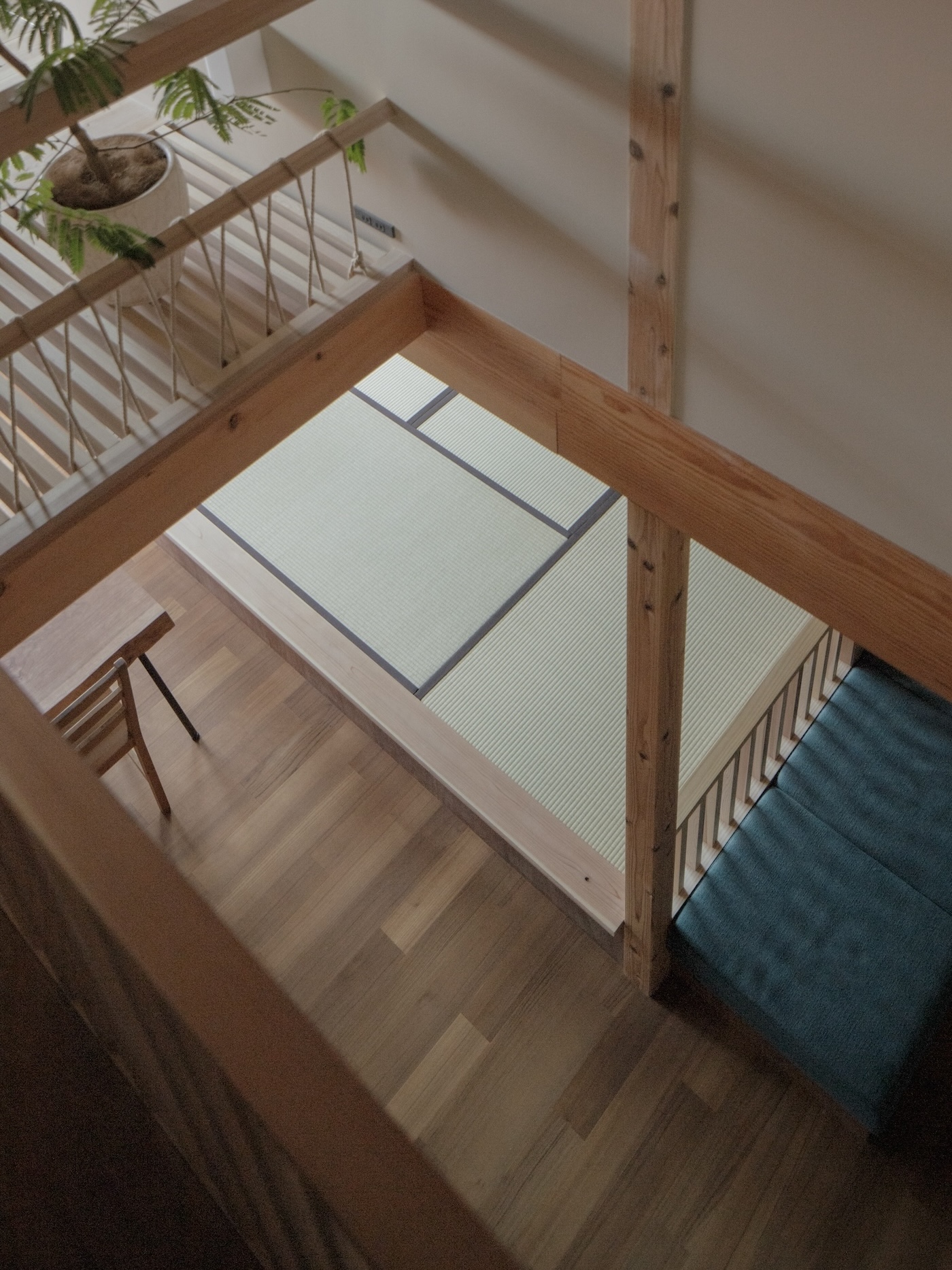
建主の要望、性能、コストといった住宅に求められる様々な条件を、日本家屋の意匠を現代的に解釈しながら、注意深く整えていった。和室では宙に浮いた押入れとささやかな床の間がソファと絡み合い、居間や食事室との境界を暈かす。地窓を塞ぐ板戸は、折り畳んで持ち手を天板の切り欠きに噛み合わせることで、テレビ台と一体造作のように収納できる。これは、日本建築に見られる、使うときだけ機能が立ち現れ、不要なときには空間や家具の一部として溶け込む可動性・兼用性から着想を得て考案したものだ。さらに、和室の障子では戸先に目隠し用の堅木を取り付けることで柱に絡む縦枠を省き、2階の引戸では柱梁そのものに鴨居や枠の役目を担わせ、枠を一部排除している。こうした操作により、軸組の独立性を際立たせ、真壁に通じる骨格の明快さを引き出している。
昨今、家を建てる際に、日本人だからといって和風の住宅を望む人は少ない。そして住宅から畳や床の間は姿を消し、閉じ切った家に住み、季節を愛でることも失われつつある。しかし、清潔な畳が放つ気配、畳縁や障子の桟の繊細な線が生む静謐な緊張感、障子を透過する柔らかな光と和紙に映る葉影が織りなす揺らぎ、内外の境を曖昧にしながら季節の風を家の中へと引き込む居心地の良い縁側⎯⎯そうした日本住宅のエレメントは、国や文化を越えて共有できる美しさを備えているのではないかと信じている。同時にまた、これらを絶やすことなく後世に残していきたいと思う。そのためにも、決して華美で懐古的なものではなく、素朴で簡素だけど機能的で美しい、一つの標準像としての庶民のためのニュートラルな日本の住まいをつくりたいと考えている。
I have been exploring what a house might be if it could resonate with people across different nations, cultures, and eras. It is neither a lavish, luxurious residence nor a minimalist white cube. Rather, I believe it is a house that quietly absorbs the atmosphere of its place while retaining a timeless and universal sense of beauty.
The site is a flagpole-shaped lot located amid a mixture of traditional Japanese houses and contemporary developer-built homes, a place that reflects an ongoing transition of time. With a limited budget, and in designing a house for a family of five suited to this place, the image I had in mind was that of a traditional Japanese house. Timber framing is exposed through shinkabe construction (shinkabe: a traditional Japanese method in which columns and beams are expressed on the interior), a stripped-down appearance free of excess. Spatial relationships allow inside and outside, and room and room, to remain loosely connected rather than rigidly separated. Even with a small floor area, such transparency makes the house feel open rather than confined. At a time when construction costs continue to rise, I believed that reconsidering the wisdom embedded in traditional Japanese houses was the most rational approach.
To harmonize with its surroundings, the building takes on a simple two-story gabled form. Its modest exterior is finished in charred cedar. While keeping floor heights low, the structure is exposed, and a single layer of cedar boards serves simultaneously as the second-floor flooring and the first-floor ceiling. In this way, a sense of openness is achieved while reducing both materials and construction processes. The construction materials were limited to readily available, standard products, and specifications that increase trade divisions were avoided in favor of materials that could be executed entirely by carpenters.
For the couple, who enjoy cooking, the kitchen and dining room are placed at the center of the house, with other domestic functions compactly arranged around them. Toward the east, where the land drops, a large opening and an engawa veranda (engawa: a narrow wooden platform or corridor connecting interior and garden) are introduced, allowing one’s awareness to naturally extend outward. The house was conceived as a place where a family of five can live comfortably, without a sense of constraint.
The various requirements placed on the house—such as client requests, performance, and cost—were carefully adjusted through a contemporary interpretation of the sensibilities of Japanese dwelling. In the Japanese-style room, a floating storage closet and a small tokonoma (tokonoma: a small space at the back of the Japanese-style room where seasonal flowers and art are displayed) intertwine with the sofa, blurring the boundary with the living and dining spaces. A foldable wooden panel used to close off a floor-level window can be stored by engaging its handle into a notch cut into the TV cabinet’s top, allowing it to act as if it were part of a single built-in piece of furniture. This device was inspired by traditional Japanese architecture, in which certain functions appear only when needed and otherwise blend into space or furniture, embracing mobility and dual-use.
Further, the vertical frame adjacent to the column in the Japanese-style room shoji (shoji: translucent sliding screens made of thin wooden lattices covered with washi) is omitted by attaching a hardwood screen to the edge of the interior-side sliding door. On the second floor, the columns and beams act as frames for the sliding doors, thereby eliminating part of the door frames. These operations enhance the independence of the structural skeleton and draw out a clear expression related to shinkabe construction.
Today, few people even in Japan choose a Japanese-style house. Tatami (tatami: a traditional floor finish made from woven rush grass) and tokonoma have gradually disappeared, and as houses become increasingly closed off, opportunities to experience the changing seasons are being lost. However, the quiet aura of clean tatami, the delicate tension created by the fine lines of tatami edging or shoji lattices, the gentle light filtered through washi paper with the subtle movement of leaf shadows, and the comfortable engawa that blurs the boundary between indoors and out while drawing seasonal breezes into the house—these elements of the Japanese house, I believe, possess a beauty that can be shared across cultures.
At the same time, I hope that such elements will not be lost but instead be carried forward into the future. For that reason, rather than creating something ornate or nostalgic, I aim to create a modest, simple, yet functional and beautiful dwelling: a neutral Japanese house for ordinary people, one that can stand as a new standard for contemporary living.
所在地:大阪府吹田市
種別:新築
用途:住宅
構造・規模:木造 2F
延床面積:96㎡
完成:2025年
施工:笹原建設
Location:Suita, Osaka
Type:New-build
Usage:Residence
Structure:Wood, 2 stories
Floor area:96㎡
Completion:2025
Construction:Sasahara Construction
Photo:Benjamin Hosking
掲載 / Publications:
『ArchDaily』 2026.01.15 (Chile)
『LINEAR Magazine』 2026.01.16 (Australia)
『Designarcus』 2026.01.27 (Tristan da Cunha)
『Hypebeast』 2026.01.31 (Hong Kong)
『Archello』 2026.02.02 (Netherlands)
『I SEE STUDIO』 2026.02.14 (Taiwan)
『Archilovers』 2026.02.17 (Italy)
『architecturephoto』 2026.02.18 (Japan)
『Plain Magazine』 2026.02.24 (Hong Kong)
『YINJI SPACE』 2026.03.04 (China)
『WABISABI』 2026.03.24 (Taiwan)
『toolbox user's report』 2026.03.24 (Japan)